Once you are forty applications in, the spreadsheet stops being maintained and the search becomes a fog. Which of these did you hear back on. Which version of the resume went to the company that just called.
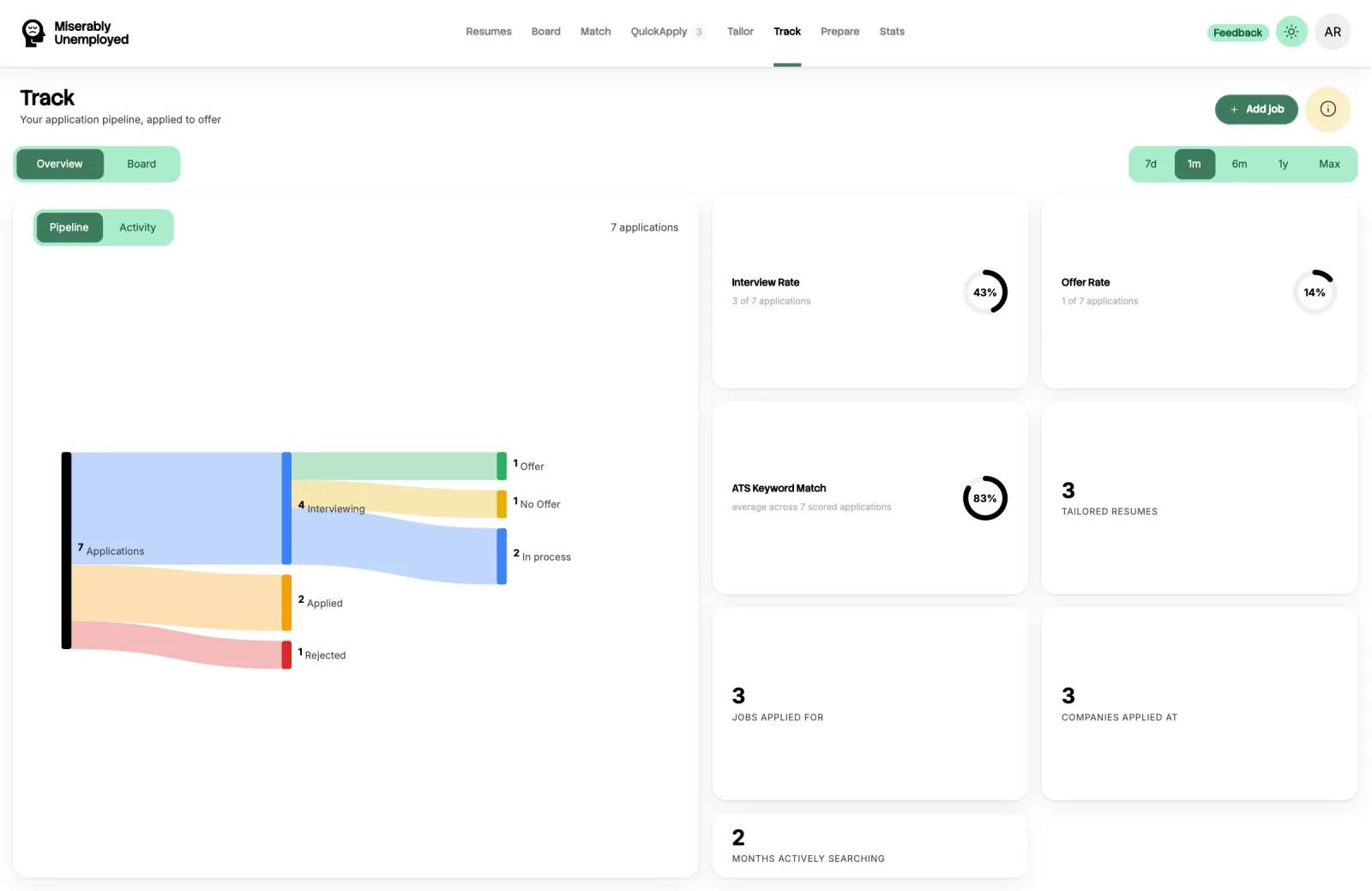
Track holds the pipeline. Saved roles land here before you apply. Apply files submissions here automatically. Each entry keeps the tailored resume you actually sent, so when the recruiter calls you can read the document they are looking at.
It also produces the only numbers in a job search worth watching: your real interview rate and offer rate, on the applications you actually sent.
The version you sent, kept
Each application holds its tailored resume and its ATS score.
Files itself where it can
Roles you press Apply on arrive automatically.
Real rates, not vibes
Interview and offer rates measured against applications you actually sent.
Free. The pipeline, the stored versions, the rates, and reading a pasted reply do not use credits.
Full documentation, including the limits